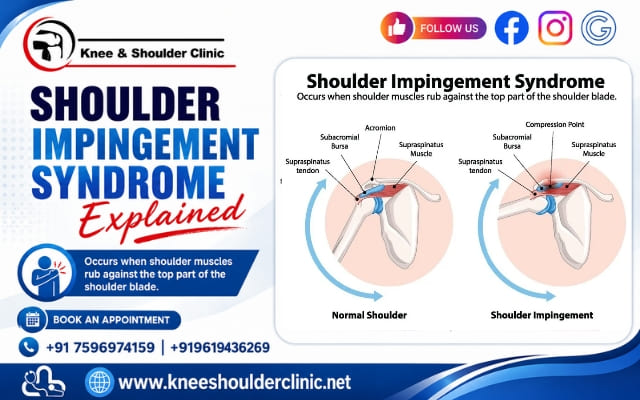
Shoulder impingement syndrome is a common cause of shoulder pain, especially when lifting the arm overhead or reaching behind the back. It happens when the soft tissues around the shoulder joint become compressed during movement. People who do repeated overhead activities, sports, lifting work, or long hours of poor posture may develop this condition over […]
Shoulder impingement syndrome is a common cause of shoulder pain, especially when lifting the arm overhead or reaching behind the back. It happens when the soft tissues around the shoulder joint become compressed during movement. People who do repeated overhead activities, sports, lifting work, or long hours of poor posture may develop this condition over time. Many people begin searching for orthopaedic shoulder doctors in howrah when the pain starts affecting sleep, work, or daily activities.
The shoulder has a narrow space where tendons and soft tissues move smoothly during arm motion. When this space becomes irritated or inflamed, the tissues can rub or pinch, causing pain and weakness. Common symptoms include pain while raising the arm, discomfort at night, difficulty wearing clothes, and reduced range of motion. Some people may also feel a catching sensation when moving the shoulder.
Shoulder impingement can develop due to repetitive strain, inflammation, poor posture, muscle imbalance, or changes in shoulder movement. It may also occur after an injury or due to long-term overuse. Early evaluation is important because untreated impingement may gradually worsen and affect shoulder strength. At Knee and Shoulder Clinic, assessment usually focuses on understanding the pain pattern, movement limitation, and possible causes before deciding the next step.
Most cases improve with non-surgical care. Rest, activity changes, guided exercises, posture correction, and physiotherapy can reduce irritation and improve shoulder movement. Anti-inflammatory medicines may be advised in some cases, depending on the person’s condition. Surgery is usually considered only when symptoms continue despite proper treatment, which is why some patients may search for a shoulder surgeon near me after months of ongoing pain.
Preventing shoulder impingement involves maintaining good posture, avoiding repeated overhead strain, strengthening shoulder muscles, and taking breaks during repetitive work. People should not ignore pain that persists for several weeks, especially if it limits movement or disturbs sleep. A timely diagnosis helps prevent stiffness and long-term discomfort. Shoulder impingement syndrome is manageable when identified early and treated properly. Understanding the cause of pain, following a structured exercise plan, and avoiding activities that worsen symptoms can support recovery. Anyone with ongoing shoulder pain may consider consulting a shoulder specialist near me for proper evaluation and guidance.